







Preventing Deconditioning – Starting on Day One
Preventing deconditioning, or minimising its impact wherever possible, is essential to improving patient outcomes and reducing length of hospital stay. In this post – Part 3 in our Preventing Hospital-Acquired Deconditioning Series – we examine five practical strategies that can help prevent or reduce deconditioning throughout the patient’s hospital journey.

1. Promote early mobilisation
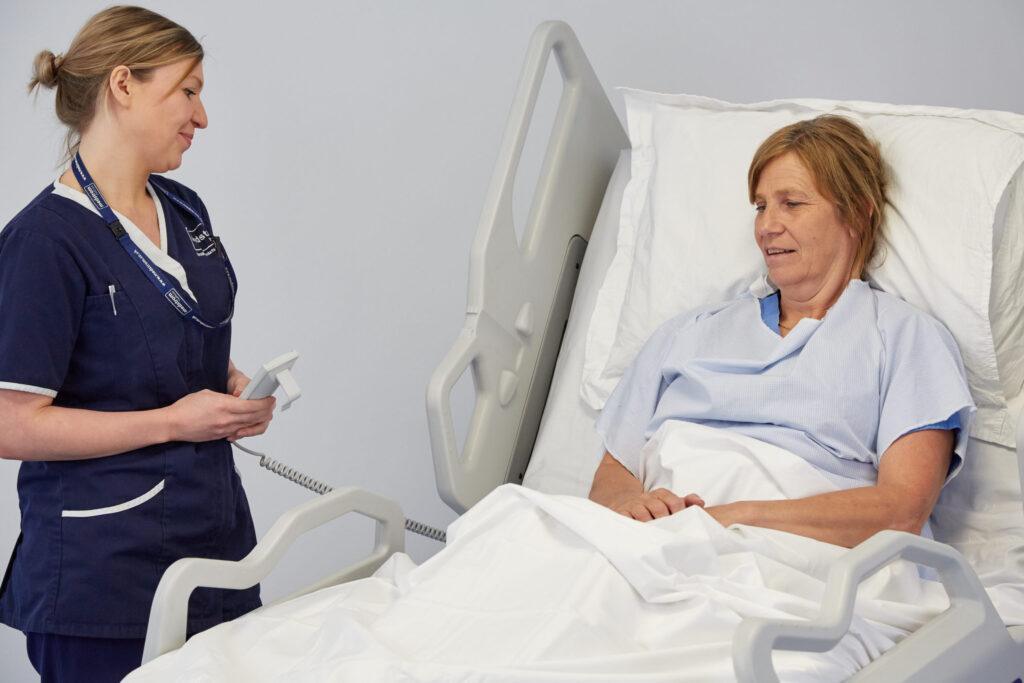
This is arguably the most important intervention for preventing deconditioning. However, it isn’t always straightforward, especially if a patient’s mobility is already impaired – for example people who are old and frail, or have multiple underlying long-term conditions.1 Having said that, it is possible at least to a degree in many cases, and some practical tips to assist with early mobilisation include:
Assess mobility as soon as it’s clinically appropriate. There is a common misconception that patients need to be assessed by a physiotherapist before they can mobilise safely, but this is only usually necessary if there is a specific concern. This can be particularly problematic if a patient is admitted to a ward on a Friday evening, and they remain in bed until Monday when the therapist is next in. That weekend of immobility may have a highly detrimental effect on the patient’s recovery.
By asking someone how they usually mobilise, it may be possible to find an appropriate walking aid for them, which will allow them to mobilise more quickly, pre-physiotherapist intervention.
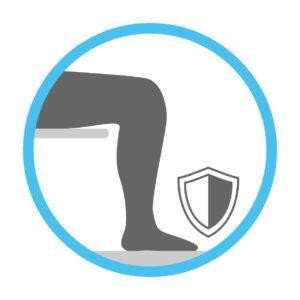 Mobilise the patient from the safest height. This is the popliteal height, with feet flat on the floor and feet, calves and thighs at right angles.2 Beds which reach an ultra-low height allow more patients, including shorter individuals, to mobilise safely.
Start in-bed mobilisation as soon as possible. This may be active or passive, depending on the patient’s condition, but both are beneficial. Any movement is better than no movement; rehabilitation doesn’t begin when the patient first walks – it begins when they stop lying still.
2. Provide the right equipment at the right time
The most appropriate equipment enables activity rather than reducing it. Ensuring the right equipment is there at the right time involves a multi-disciplinary approach by the whole healthcare team, with everyone having a role in encouraging movement and maintaining function.
 The right equipment extends beyond a bed and mattress. For example, if a patient has an appropriate bed and mattress to meet their needs, but a chair which does not (e.g. wrong size/height/depth/level of support), they will be reluctant to sit out. Moreover, the wrong chair could cause harm including falls and pressure ulcers. Something as simple as a walking stick could help some patients get back on their feet.
Equipment examples include:
- Adjustable profiling beds that facilitate sitting and transfers and safe mobilisation.
- Therapeutic mattresses that support repositioning without compromising pressure injury prevention.
- Appropriate seating and specialist chairs.
- Walking aids.
- Transfer equipment when required.
- Bariatric equipment that enables safe mobilisation for plus-size patients.
- Ceiling or mobile hoists to facilitate early rehabilitation where appropriate.
The exact combination of equipment needed at a given time is patient specific. Medstrom’s team of Clinical Advisors are available to offer individualised support and guidance when required.
3. Reduce unnecessary time in bed
Many hospitalised patients spend considerably more time in bed than is clinically necessary, often because of organisational, cultural or practical barriers rather than medical need.
 For example, an audit in a care of the elderly ward found that over a third of patients medically fit to sit out remained in bed all day. A root cause analysis was undertaken, which identified four main reasons for bedrest:
- Risk aversion
- Unknown function
- Widespread ‘bed is safe’ culture
- Lack of equipment
Following the audit and root cause analysis, a project was initiated in the ward to address these issues. This delivered a sustained and significant improvement in the number of patients sitting out; at the time of publication, the improvement was 97.8%.3
End PJ Paralysis
Encouraging patients to get up out of bed, get dressed and get moving has been proven to improve outcomes. One great example and success story is the End PJ Paralysis initiative, which originally ran for 70 days in 2018. Over that 70-day period, it reduced falls, pressure ulcers and length of stay, and saved 710,000 NHS bed days through reduced length of stay.4 End PJ Paralysis is now a global movement which acts as a forum for healthcare professionals to talk about encouraging mobility and preventing harm. It’s free to join – click here for the link.
In 2025, they released a short, powerful video with the message that our actions as healthcare professionals can be the reason someone gets home:
4. Optimise pain management
Pain is one of the biggest barriers to movement.
Effective analgesia allows patients to:
- Participate in therapy
- Transfer safely
- Move and walk more confidently
- Sleep better, supporting recovery
5. Optimise nutrition and hydration
Early nutritional screening, timely dietitian involvement and the provision of patient-centred nutritional support help promote recovery and preserve muscle mass. Combined with maintaining adequate hydration, these measures can reduce both the severity and speed of HAD.
Conclusion
Movement should be the default approach to hospital care. Frequent activity throughout the day helps preserve muscle strength, functional ability and independence. It should be supported by appropriate equipment, multidisciplinary care, good nutrition, adequate sleep and effective pain management. While deconditioning cannot always be prevented completely, early intervention and a proactive approach can substantially reduce its severity and improve both short- and long-term patient outcomes.
Equipment should support safe movement, independent repositioning and early mobilisation. This makes timely product selection a key component of preventing deconditioning rather than simply a matter of comfort or pressure injury prevention.
Part 1 in this series discusses the causes, risk factors, and physical, cognitive and psychological effects of deconditoning.
Part 2 discusses how quickly deconditioning can occur, and the effects on patients.
References
-
Rindsland S (2021) Early mobilisation 1: risk factors, complications and costs. Nursing Times [online]; 117: 4, 22-24.
-
Martindale D (2021). Calculating bed height for hospital patients using popliteal measurement. Nursing Times [online]; 117: 10.
-
Butler J and Welford T. 108 A Multidisciplinary Team Initiative to End PJ Paralysis Was Successful in Achieving Cultural Change on An Acute Geriatric Ward. Age and Ageing, Volume 50, Issue Supplement_1, March 2021, Pages i12–i42
-
Stephenson J (2018) Campaign to ‘end PJ paralysis’ saved 710,000 hospital days. 2018, nursingtimes.net, 21 August.
Authors
Emma Tarpey – National Clinical Specialist & Liz Allan – Clinical Research Manager