

Sustainable Patient Washing Supporting NHS Net Zero
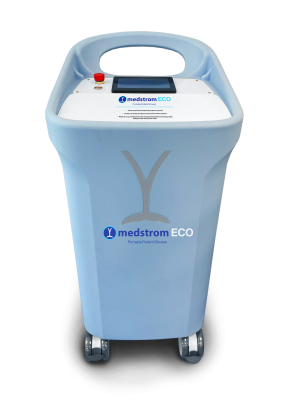
NHS Net Zero objectives are based firmly around three key principles, reducing total emissions, reducing waste and reducing water consumption. With that in mind, traditional bed bathing practices are extremely counter-productive, resulting in significant water usage and use of single-use materials requiring specialist clinical waste disposal. Hear from clinicians who are using ECO, a sustainable portable patient shower that has been introduced at their organisation, revolutionising the bed bathing process.
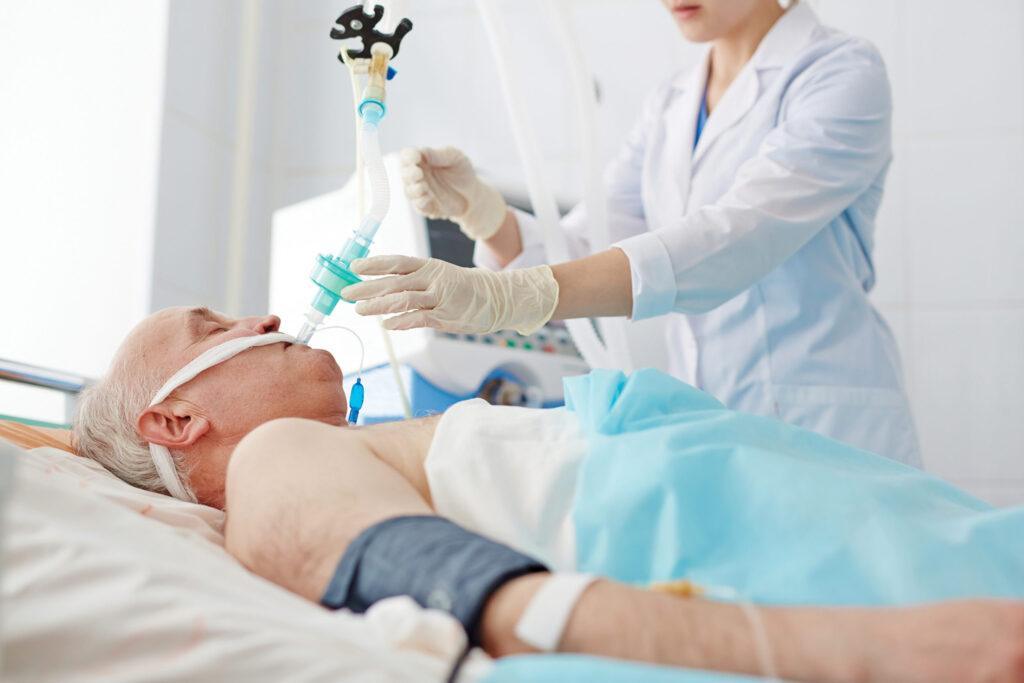
Unsustainable Traditional Bed Bathing
The process of traditional bed bathing hasn’t changed in centuries – both water and waste intensive at a time when the NHS is looking for sustainable improvements wherever possible. Plus, it is time intensive from a caregiver’s perspective, especially in a busy and demanding healthcare environment. Lucy, a Ward Sister at Hywel Dda Health Board, describes it perfectly:
“We fill up a pulp bowl with hot water from a designated water source and it can take a long time to run to get hot. You’re carrying hot water and you’ve got to go through multiple doors with a lot of traffic, so there’s potential it could spill. There could then be further delays, so you could be emptying out that water and then filling it up again. Sometimes, it’s not just an easy one-time run.”
In addition to the wasteful process described above you also have to contend with:
- Water run down the sink before reaching the right temperature (some studies indicate 11.25 litres per bowl fill)
- The frequent use of multiple pulp bowls due to leakages
- The use of disposable patient wipes
- The associated water consumption when using a macerator (24 litres for one macerator cycle).
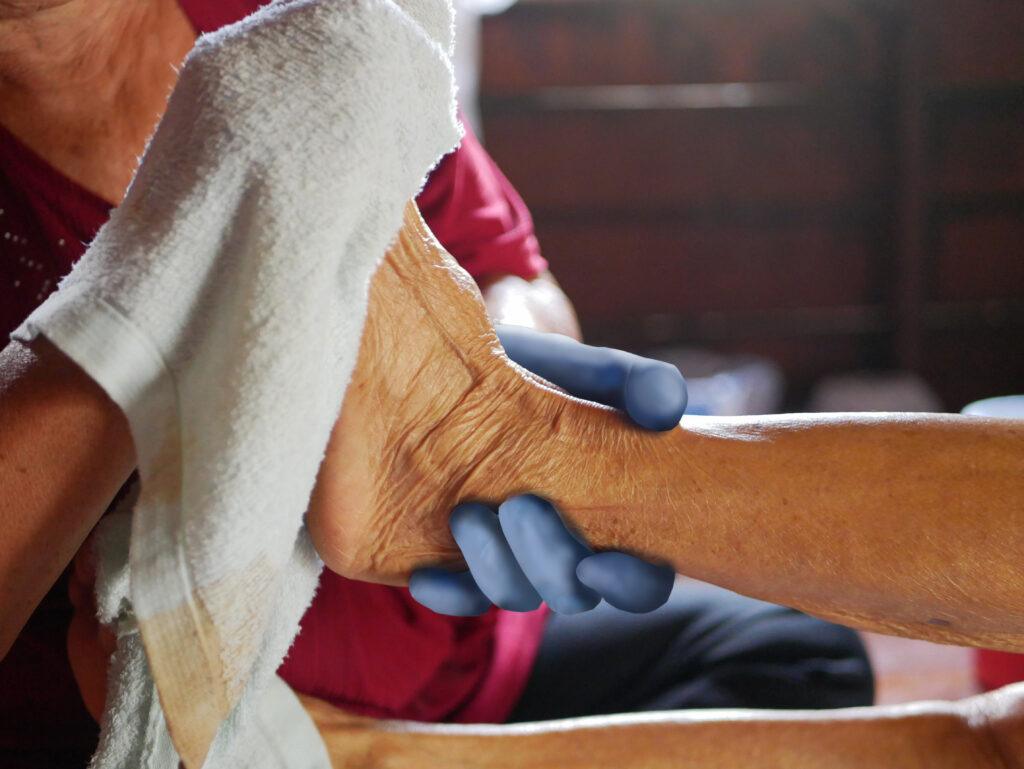
NHS Net Zero targets seek to reduce emissions that can be directly influenced, by 80% by 2032.1 Waste and water contribute to 5% of the NHS carbon footprint, and the traditional bed bathing process adds significantly to this. To meet these targets, it is suggested that the NHS should not only rethink the way care is delivered but identify new ways of working and embrace innovation.1
ECO Patient Washing Meets NHS Net Zero Goals
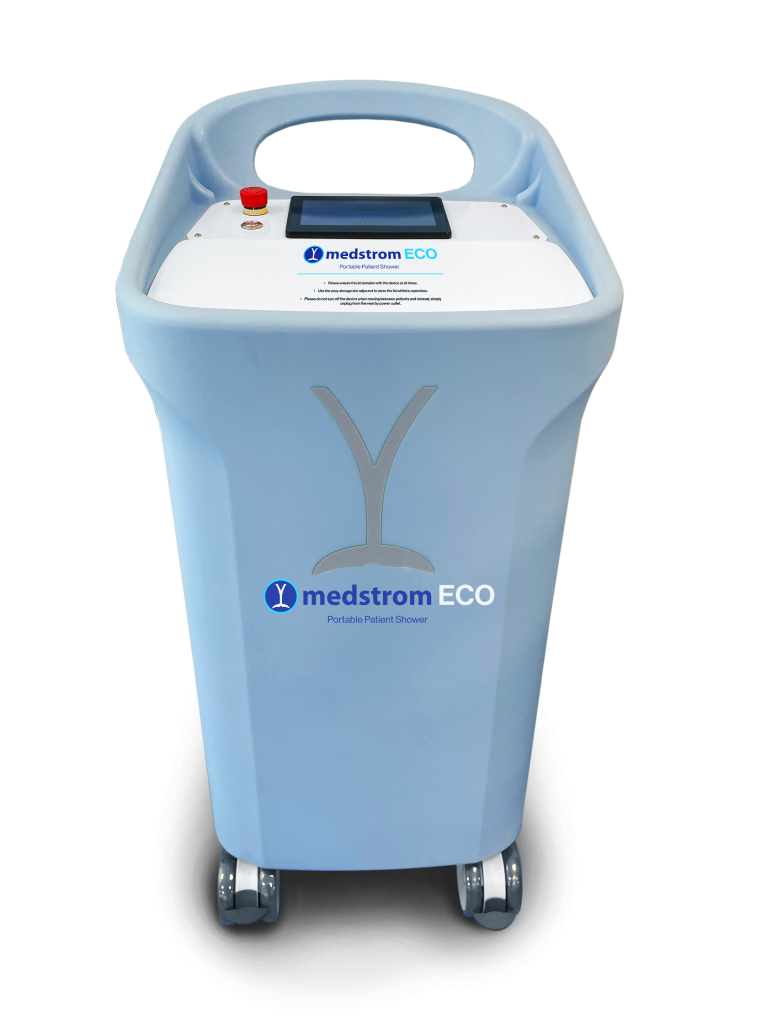
ECO is a portable patient shower that is being adopted by numerous NHS organisations to support their sustainable efforts, whilst also helping to save caregivers time and prevent deconditioning. This unique device facilitates effective patient washing using only 500ml of water per patient. In comparison to traditional bed bathing, this can use up to 95% less water, just from the wash alone. Dispensed via a easy-to-use directional stylus, at a consistent temperature, ECO has been show to deliver significant efficiencies. Sarah, Deconditioning Champion at Hywel Dda Health Board, mentioned:
“One of the NHS targets is to save water. So, ECO saves water and it washes approximately 10 patients [with a single tank]. After washing patients recently, I held up the tank to show everyone how much water we had actually used, as they saw what I put into it at first, and they were all blown away!”
Lucy, Ward Sister, was also keen to note the environmental benefits of using ECO in comparison to the traditional bed bathing process, adding:
“I was completely shocked at how little water ECO used – it doesn’t use much at all. Every time I have used the [ECO] shower, I haven’t used any wipes because I don’t need to. I give the patient the soap, they put it on their body directly and they just wash it off.”
In fact, from additional evaluations and studies using the ECO portable patient shower with clinicians at the organisation, they were able to demonstrate an 83% reduction in the number of patient wipes being used. Tallied alongside the removal of pulp bowls and the significant drop in water consumption, this provides the NHS with not just sustainability savings but financial savings.
For more information about ECO and how you can try it for yourself, contact us today.
References:
- NHS England (2022). Delivering a net zero NHS. [online] www.england.nhs.uk. Available at: https://www.england.nhs.uk/greenernhs/a-net-zero-nhs/.