


Bed Bathing | Enhancing Efficiency & Dignity
Patient hygiene is regarded as a fundamental of nursing care.1 Yet, the traditional method of bed bathing and its associated inefficiencies can be incredibly time intensive. Meaning that nursing staff are under immense pressure to physically get around to all the patients that require washes, potentially resulting in patients not always receiving a wash. Hear from clinicians who have been using ECO, an innovative portable patient shower, that has been shown to deliver real time savings for caregivers.
Time-Consuming Traditional Bed Bathing
Traditional bed bathing using a bowl filled with water can be incredibly time-consuming. Studies show traditional bed bathing takes between 24 and 48 minutes on average, dependent on the patient.2,3 This can easily be extended if the water in a pulp bowl gets too cold, resulting in refilling more than once – not to mention the additional waste associated. This time often is focused on general patient hygiene, meaning that hair washing can be neglected due to the perceived difficulties that are entailed in a clinical setting.
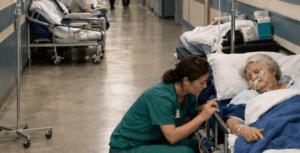
Altogether, this is made even more difficult given that hospitals are getting busier. Emergency hospital admissions reached 6.4million annually in England between 2023 and 2024.4 Plus, because of overcrowding, wards are at capacity and NHS doctors confirm that “corridor care” is becoming routine.5
Sarah, RGN and Deconditioning Champion at Hywel Dda Health Board, summarises it nicely by saying:
“Traditional bed bathing does take a while and it is difficult to regulate and get everything quite perfect for that patient.”
ECO Simplifies Bed Bathing
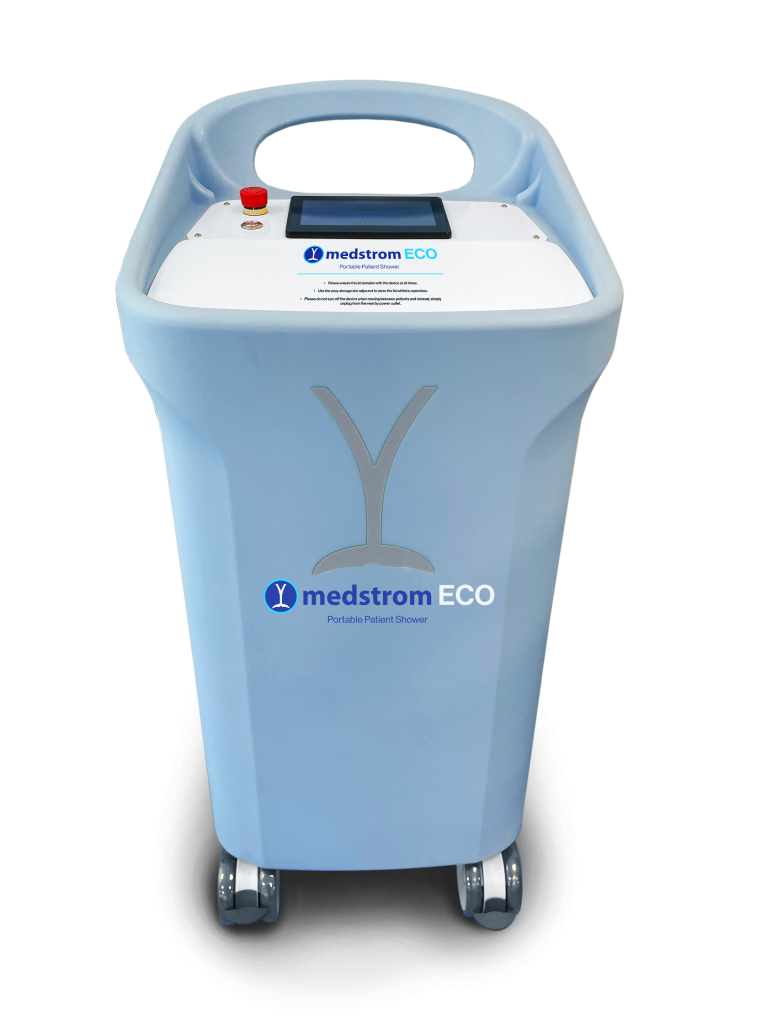
With the support of Medstrom, clinicians at Hywel Dda have been using ECO to realise a more efficient, quicker bed bath that does not compromise on patient dignity or experience. The unique patient shower can be filled with an enough water at the outset to wash approximately 10 patients and remains at a consistent temperature that can be adjusted easily during use to meet patient preference.
The simplicity of the ECO has been noted as a real difference to the staff at Hywel Dda, with Lucy, Ward Sister, commenting:
“When we’re helping them, it [ECO] does definitely halve the time. Not because we’re rushing, just because it is easier. It is just so much more centred into what you need for that patient at that particular time.
“Our time is precious and we do try to give as much time to everyone as possible. If it’s going to be time saving on one side, then we can give more care to another patient.”
Across Care of the Elderly, CCU and Stroke units at Hywel Dda, ECO was able to evidence a 33% reduction in wash time for clinicians, with other organisations experiencing upwards of 60% versus traditional bed bathing. The precision able to be achieved using ECO also helps with ensuring washes can be completed faster, but also supporting patient independence. Sarah noted:
“ECO has been so useful for us as you can leave it with the patient, show them how to use it as it is that easy. If you’re bed bathing with a cloth it goes everywhere, whereas with the stylus, you can target it perfectly.”
For more information about ECO and how you can try it for yourself, contact us today.
References:
- Hanna‐Sisko Kaukkila, Peltonen, L., Anna‐Sofia Korteniemi, Pasanen, M., Sanna Salanterä, Pirjo Sibakov and Asta Heikkilä (2025). The Quality of Fundamental Care as Perceived by Nurses and Patients in a Hospital Setting: A Descriptive Comparative Study. Nursing Open, [online] 12(4). doi:https://doi.org/10.1002/nop2.70234.
- Groven FMV et al (2019) The effects of washing without water versus the traditional bed bath with water and soap on comfort and physical demands: protocol of a crossover randomized trial. Research Square (accessed 17 October 2025)
- Kortebein, P., Symons, T.B., Ferrando, A., Paddon-Jones, D., Ronsen, O., Protas, E., Conger, S., Lombeida, J., Wolfe, R. and Evans, W.J. (2008). Functional Impact of 10 Days of Bed Rest in Healthy Older Adults. The Journals of Gerontology Series A: Biological Sciences and Medical Sciences, [online] 63(10), pp.1076–1081.
- Annual A&E Activity and Emergency Admissions statistics, NHS and independent sector organisations in England. 2024. NHS Digital. Available online: Quarterly-Annual-Time-Series-1.xls
- Doctors confirm ‘corridor care’ crisis as 80% forced to treat patients in unsafe spaces. 2025. Royal College of Physicians. Available online: Doctors confirm ‘corridor care’ crisis as 80% forced to treat patients in unsafe spaces | RCP