




Deconditioning Uncovered: Understanding Hospital-Acquired Deconditioning
Hospital-acquired deconditioning is a significant contributor to functional decline, reduced mobility, longer hospital stays and loss of independence. Despite its impact, it can often go unrecognised until meaningful deterioration has already occurred.
In this educational event, experts from research, clinical practice and lived experience explore how deconditioning develops, how it affects patients, and the practical steps healthcare professionals can take to identify risks earlier and support rehabilitation from the outset.
Watch the recordings and explore the key insights below.
How Do Healthcare Professionals Recognise and Respond to Hospital-Acquired Deconditioning?
“When approaching hospital-acquired deconditioning, we need to reflect that what ultimately matters is people’s experience of care.”
Physiotherapist and researcher Meri Westlake examines how healthcare professionals identify and respond to hospital-acquired deconditioning in clinical practice.
Drawing on her published research, Meri explores the challenges of recognising deconditioning early and highlights the need for clearer assessment frameworks that support timely intervention. Her session emphasises that effective rehabilitation starts with understanding the patient’s experience and the outcomes that matter most to them.
Can You Prevent Deconditioning at the Front Door?
“My key principles for preventing deconditioning at the outset are: Let me walk, keep me continent, support my cognition.”
As Consultant Geriatrician and National Clinical Lead for Frailty, NHS Wales, Siobhan Lewis discusses the importance of identifying deconditioning risk from the earliest stages of a patient’s hospital journey.
Her presentation introduces the Deconditioning Early Warning Indicator (DEWI), a framework designed to help clinicians understand a patient’s baseline function, current status and rehabilitation priorities across 11 assessment domains.
Siobhan highlights that deconditioning is a multi-system condition that extends beyond muscle loss, contributing to delirium, falls, infection, prolonged hospital stays and reduced independence. Early intervention and individualised rehabilitation are key to preventing avoidable decline.
Strong Basics. Better Outcomes.
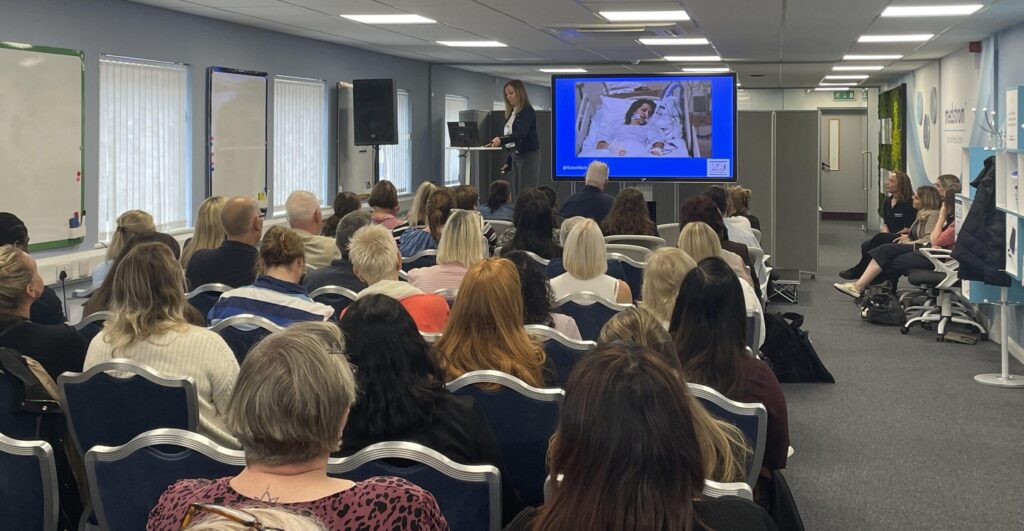
“It takes time but you’ve got to understand what matters most to the patient. This is going to be the best way to get them motivated. Secondly, mobilisation is key!”
Patient advocate Kate Allatt shares her lived experience of recovery following locked-in syndrome and explores the importance of rehabilitation, mobilisation and patient-centred care.
Using both personal experiences and patient case studies, Kate highlights how earlier intervention can help prevent deconditioning and improve outcomes. Central to her message is the importance of understanding individual goals, empowering patients to participate in their recovery, and ensuring rehabilitation begins as early as possible.
Key Learning Points from Deconditioning Uncovered
- Hospital-acquired deconditioning can develop rapidly during a hospital stay.
- The effects extend beyond mobility, impacting cognition, continence, independence and overall recovery.
- Early recognition and intervention are critical to preventing avoidable decline.
- Patient-centred rehabilitation should focus on what matters most to the individual.
- Tools such as DEWI can support more consistent assessment and earlier action.
By combining research, clinical expertise and lived experience, these sessions demonstrate how proactive, personalised approaches can help healthcare teams reduce the impact of deconditioning and support better patient outcomes.
To find out how Medstrom can support your team in preventing deconditioning earlier, get in touch with our clinical team today.
